The Biggest Misconception About Roman Shades in Clayton MO
Walk into any Clayton living room—whether it overlooks Shaw Park from a Wydown-Forsyth Tudor or catches afternoon light in a Clayton Gardens mid-century ranch—and you’ll likely hear the same assumption: “Roman shades are purely decorative and won’t hold up to Missouri weather.” That belief costs homeowners money and comfort. The truth? When you select the right fabrics and have them professionally measured for your specific windows, roman shades become one of the most durable, energy-smart, and visually refined window treatments available to Clayton residents.
If you’re searching for roman shades in Clayton MO, here’s your quick answer: custom roman shades made with humidity-resistant linings and precision-fitted to your window dimensions maintain their crisp folds through St. Louis summer swings and frigid January cold snaps alike. They reduce solar heat gain, complement Clayton’s architectural diversity, and deliver the polished aesthetic this community expects. Made in the Shade of Clayton and Fuquay-Varina provides free in-home consultations so you can see fabric samples against your actual walls and light conditions—call (919) 939-2009 to schedule yours.
What People Assume vs. What Actually Holds Up in Clayton Homes
Assumption #1: Any Fabric Works Fine
Missouri’s humidity—often exceeding 70% on summer mornings near Shaw Park—can cause low-quality textiles to warp, sag, or develop mildew along seams. Many homeowners assume that the fabric swatch they saw online will perform the same way in a Brentwood Forest condo as it would in a dry Arizona climate. It won’t.
What actually holds up: Polyester-blend and solution-dyed acrylic fabrics engineered for high-humidity environments. These textiles resist moisture absorption, which means your roman shades keep their structured pleats through August’s muggiest weeks and January’s furnace-dried air. During your consultation, you’ll handle samples and learn which materials suit west-facing windows that bake in afternoon sun versus north-facing rooms that stay cooler.
Assumption #2: “Close Enough” Measurements Work
Standard, off-the-shelf shades come in set widths and drops. Clayton’s architectural variety—tall Tudor casement windows, oversized mid-century picture windows, narrow sidelights flanking front doors—rarely matches those preset sizes. Installing a shade that’s an inch too narrow or two inches too short creates light gaps, an unfinished look, and reduced insulation.
What actually holds up: Professional in-home measurement accounts for frame depth, trim style, and the mounting method (inside or outside mount) that best suits your window. A precise fit eliminates gaps, maximizes privacy, and ensures the shade operates smoothly without catching on hardware or binding against the frame. This matters especially in older Wydown-Forsyth homes where window openings may have settled over decades.
Assumption #3: Roman Shades Are Only for Traditional Rooms
Because the classic roman shade evokes historic interiors, some Clayton homeowners with contemporary or mid-century modern spaces assume the style won’t work. That overlooks the range of fold types and fabric finishes available today.
What actually holds up:
- Flat-fold roman shades stack in crisp, horizontal pleats—ideal for minimalist or modern rooms.
- Hobbled (or soft-fold) roman shades drape with gentle curves, adding texture to traditional or transitional spaces.
- Relaxed roman shades feature a gentle swag along the bottom edge, perfect for casual elegance in sunrooms or breakfast nooks.
Whether your Clayton home channels mid-century clean lines or Tudor-era character, there’s a roman shade silhouette that amplifies rather than fights your design intent.
How Clayton’s Climate Shapes Fabric Selection
Temperature swings in the St. Louis metro—sometimes 30-degree shifts in a single day during spring and fall—stress window treatments differently than stable climates do. Here’s how the right fabric responds:
| Climate Challenge | Fabric Solution | Benefit for Your Clayton Home |
|---|---|---|
| Summer humidity (60-80%) | Polyester or solution-dyed acrylic | Resists mildew and sagging |
| Winter dryness from heating | Woven blends with thermal lining | Prevents brittleness and cracking |
| Intense afternoon sun | UV-stabilized or blackout lining | Reduces fading of furnishings near windows |
| Rapid temperature swings | Insulated cellular-backed roman shades | Buffers drafts and lowers HVAC load |
Ameren Missouri rate increases make energy efficiency more relevant than ever for Clayton households. Insulated linings on your roman shades help moderate indoor temperatures, easing demand on your heating and cooling system. While specific savings depend on your home’s envelope and usage patterns, reducing solar heat gain through south- and west-facing windows is a practical step toward lower summer electric bills.
Matching Roman Shades to Clayton’s Architectural Styles
Tudor Revival Estates
These Wydown-Forsyth classics feature leaded glass, arched transoms, and deep window reveals. Roman shades with rich textures—linen-look weaves or subtle damask patterns—complement the historical character. Choose an inside mount to preserve decorative trim, and consider a motorized lift for hard-to-reach second-story windows.
Mid-Century Modern Homes
Clayton Gardens showcases post-war architecture with large, unadorned windows. Flat-fold roman shades in neutral solids maintain the era’s clean aesthetic. Light-filtering fabrics preserve the open, airy feel while softening glare on hardwood floors.
Luxury Condos Near Clayton City Hall
High-rise and boutique condo developments often feature floor-to-ceiling glass. Roman shades offer a softer alternative to roller shades, adding warmth without blocking views when raised. Blackout linings ensure bedroom privacy, even with neighboring buildings in sightlines.
“The right window treatment should feel like it was designed for your exact home—not adapted from a catalog.” — Professional design principle guiding every Made in the Shade consultation.
Evidence-Based Reasons to Choose Professional Installation
Some assume DIY installation saves money. In practice, incorrect mounting often leads to:
- Bracket misalignment—causing uneven lifting and premature cord or mechanism wear.
- Drilling into insufficient backing—screws that pull free from drywall, especially on outside mounts.
- Voided manufacturer warranties—many fabric and mechanism guarantees require professional installation.
Made in the Shade of Clayton and Fuquay-Varina handles every step: precision measurement, fabric selection guidance, manufacturing, and secure installation. You receive manufacturer-backed warranties on materials and workmanship, protecting your investment for years.
What Your Consultation Includes
- In-home visit at a time convenient for your schedule
- Large fabric samples viewed in your actual lighting
- Expert guidance on fold style, lining options, and lift mechanisms (cord loop, cordless, or motorized)
- Precise window measurements recorded room by room
- Transparent pricing with no hidden fees
Living Room Window Treatments Clayton Residents Prefer
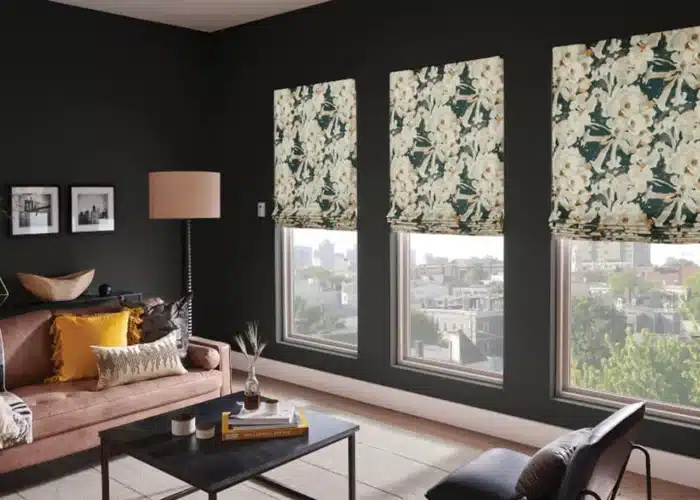
Your living room sets the tone for your entire home. In Clayton neighborhoods like Brentwood Forest, homeowners often prioritize:
- Light control—roman shades adjust from fully open to completely closed, giving you precise command over natural light.
- Privacy without darkness—light-filtering fabrics obscure sightlines from the street while keeping rooms bright.
- Design cohesion—custom fabric selection lets you coordinate window treatments with upholstery, wall color, and architectural details.
For Clayton homeowners who entertain frequently—perhaps after an afternoon stroll near the St. Louis Art Museum—roman shades create a backdrop that impresses guests while requiring minimal maintenance.
Roman Shades Clayton MO Cost Factors
Pricing for custom roman shades depends on several variables:
- Window dimensions—larger windows require more fabric and heavier-duty hardware.
- Fabric grade—basic polyester blends cost less than designer linens or performance textiles.
- Lining type—privacy lining, blackout lining, and thermal backing each add incremental cost.
- Lift mechanism—cordless and motorized options carry a premium over standard cord loops.
Because every Clayton home differs, the most accurate way to understand your investment is a free in-home consultation. You’ll receive a detailed quote covering materials, installation, and any applicable manufacturer warranties—no guessing, no surprises.
Schedule Your Free Roman Shade Consultation in Clayton Today
If you’ve hesitated because you assumed roman shades wouldn’t survive Missouri’s humidity or wouldn’t suit your home’s style, consider this your invitation to see the evidence firsthand. Made in the Shade of Clayton and Fuquay-Varina brings samples directly to your living room, measures every window with care, and installs your finished shades with precision.
Call (919) 939-2009 or request a consultation online. Discover why Clayton homeowners—from Wydown-Forsyth estates to modern condos—trust professional roman shade installation to elevate their living spaces and stand up to every season.
Frequently Asked Questions
How long do custom roman shades take to arrive after ordering in Clayton?
Most custom roman shades require three to four weeks from order confirmation to installation. The timeline includes fabric sourcing, precision manufacturing, and scheduling your professional installation appointment at a convenient time.
Can roman shades be motorized for hard-to-reach Clayton windows?
Yes. Motorized lift systems integrate with smart-home platforms or operate via remote control, making them ideal for tall Tudor windows, skylights, or any location where manual operation is impractical.
Are roman shades safe for homes with young children or pets?
Cordless and motorized roman shades eliminate dangling cords entirely, reducing entanglement risks. During your consultation, your specialist can recommend child- and pet-safe lift options that meet current safety guidelines.
What maintenance do roman shades require in Missouri’s humid climate?
Regular light dusting or vacuuming with a brush attachment keeps fabric clean. For deeper cleaning, most humidity-resistant fabrics can be spot-cleaned with a damp cloth. Avoid soaking, which can stress seams and linings.